The Association for Palliative Medicine of Great Britain and Ireland (APM) is one of the world’s largest representative bodies of medical/healthcare professionals practising or interested in palliative care, with a growing membership of over 1,400. We welcome international members. We work in strategic alliance with those who can contribute to achieving our vision, supporting our values and delivering our aims. The APM represent you, our members, to ensure that your voice is heard and that you are represented in all areas relative to Palliative Medicine practice (e.g. legal, political, training, economic and workforce), as well as many other issues, including continually changing topical national debates and essential matters such as assisted dying, palliative care funding, clinical nutrition and hydration, assisted ventilation and Palliative Medicine Training. Here you can find papers pertaining to the most recent APM AGM papers and minutes. Should you have any questions regarding these resources, don’t hesitate to contact Compleat Secretariat. Palliative Medicine provides clinical leadership, care and support to prevent and relieve suffering for people with life-limiting and life-threatening illnesses. The Association for Palliative Medicine of Great Britain and Ireland (APM) is one of the world’s largest representative bodies of medical/health care professionals practising or interested in Palliative Medicine. It was formed in 1986 and has a growing membership of over 1,400. It represents healthcare professionals of all grades working in or interested in specialist palliative care, whether in hospices, hospitals or the community. It is harder, nowadays, to gain a standalone training post in a hospice, which would give you the ideal experience of what a career in palliative Medicine involves and whether you really can commit yourself to it. Nevertheless, look for other opportunities where you can link up with specialists in palliative Medicine. For example, as a post-foundation doctor, try to organise a ‘taster session’ during your training with a local hospice. Why not enter prizes organised by the Association of Palliative Medicine? There are essay prizes for undergraduates or audit prizes for junior doctors. Note the application deadlines, and do not give up! If you are unsuccessful after both rounds of recruitment, seek advice from your deanery’s training programme director for palliative Medicine. If your heart is set on the speciality, consider a non-training grade hospice post, which would give you valuable clinical experience in the speciality as well as demonstrate your commitment. Applications (Round One) usually open in November for a start date between August to December. More information regarding this is available on the PHS Recruitment website. The application form can take many hours to complete, so don’t leave it until the last minute! Once the application form has been reviewed, candidates will be short-listed for an interview based on scoring the application form. The interview has four interview question sections lasting 5-8 minutes each. You will be marked in each of these four question areas, with a fifth mark being given for your communication and reflection skills in the ethical scenario. The entire interview will last around 30 minutes. The four questions are: Question 1: Suitability and Commitment: This will give you an opportunity to expand on your application form. This station will last approximately 5 minutes. Question 2: Medical Registrar Suitability: This will explore the non-clinical parts of being a medical registrar, including managing an unselected take and managing an MDT. This will last approximately 5 minutes. Question 3: Professionalism and Governance: This will be a discussion on professionalism and governance. The interviews will give you a single sentence or short question to prompt discussion. This assessment will be underpinned by GMC Good Medical Practice. Question 4: Ethical / Communication Scenario: You will be scored on your skills in handling an ethical scenario and will receive another mark for your communication and reflection skills. The ethical scenario will be a hypothetical situation given to you in a written format. You will be given 5 minutes to prepare and then will have 8 minutes to perform a role-play. You will then be given 2 minutes at the end to reflect on your communication skills at the end of the role play. The panellists were looking for ‘good all-rounders’ who showed genuine enthusiasm for and commitment to high-quality palliative care Small adjustments to your current audit or teaching projects may radically alter your short-listing score when you come to apply. This is helpful (though not essential) to be able to deal with clinical and ethical scenarios at the interview – if you haven’t had the opportunity to work in palliative care, try to organise a “Taster” week. A great way to familiarise oneself with “hot topics” in palliative care research and practice. Ask your local palliative care team about upcoming events. Run through likely questions or scenarios with a friend or colleague and consider attending a communication skills course. You will need to provide evidence of all achievements mentioned on the application form, and there is strict guidance regarding how to present it. Palliative Medicine is a rewarding career that allows you to support patients and families at vulnerable times. There are opportunities for complex problem-solving, challenging communication and fascinating ethical dilemmas. Good palliative care requires multi-professional teams and interactions with various hospital and community colleagues. Palliative Medicine specialist training happens in hospitals, hospices and the community. Training full-time in a numbered post takes four years to gain a certificate of completion (CCT) in Palliative Medicine. Since 2022 Palliative Medicine has been dual accredited with General Internal Medicine, meaning that one year out of the four years of specialist training will be spent in acute Medicine. The RCP census shows that Palliative Medicine is the 11th largest medical speciality, with around 700 consultants in the UK. Trainee numbers in Palliative Medicine are increasing. Approximately 48% of consultants work less than full-time, and a similar number of trainees choose to train flexibly. About a third of consultant jobs are joint NHS/third sector, reflecting the fact that there are options to work across settings and organisations. Speciality trainees rate their training highly in the GMC trainees’ annual survey. The transformation of the NHS following the COVID-19 pandemic will require increased speciality training numbers. Increased numbers of medical student placements have already been announced. This will allow an expansion of the palliative medicine workforce with roles required in all settings. If you would like to learn more, visit our ‘About Palliative Care‘ page For more information, please see the following resources:
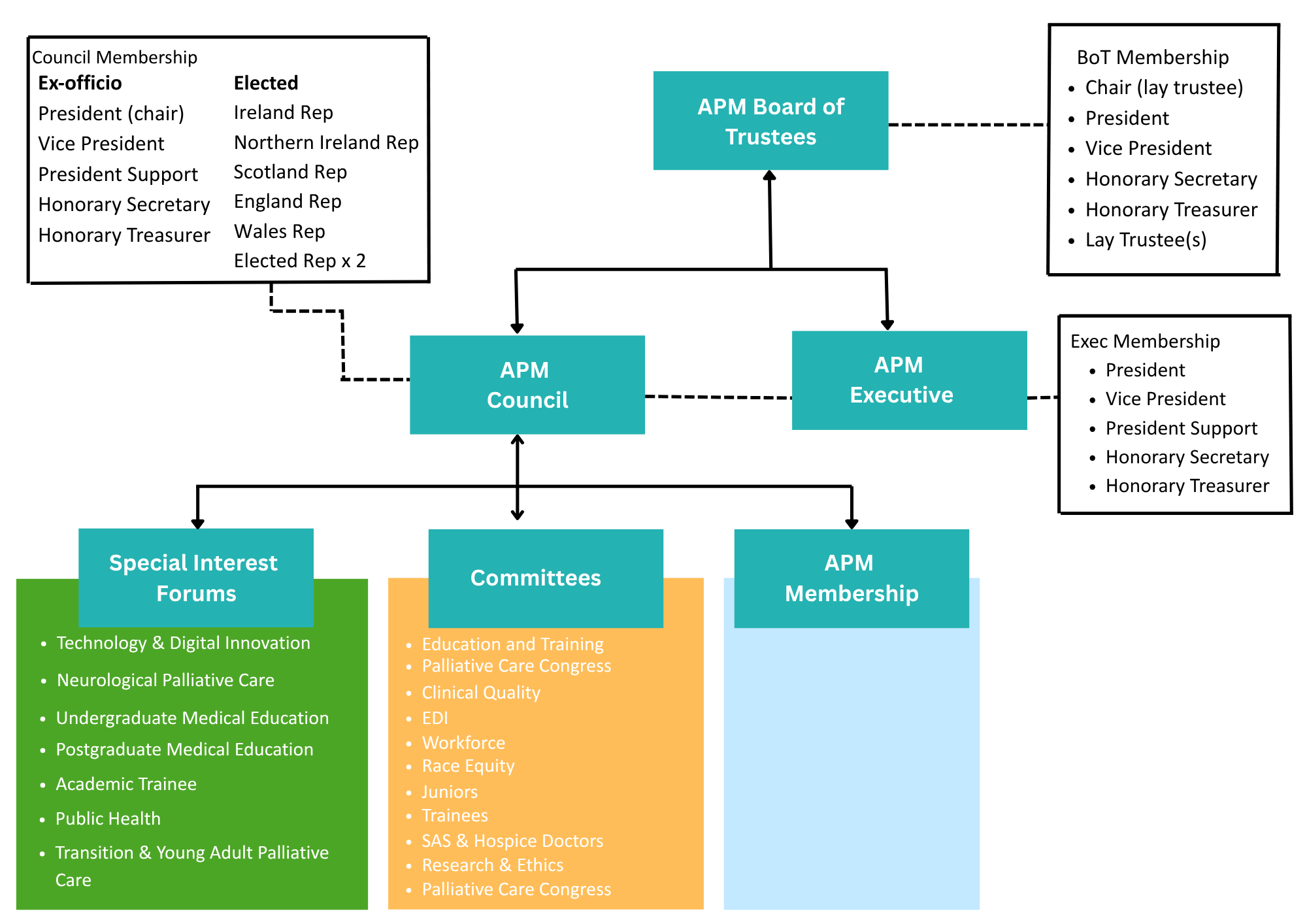
APM Annual General Meeting Papers
2026
Strategy 2026-2028
Want to see APM’s objectives and strategies?
What is Palliative Medicine?
Palliative Medicine’s specific expertise is in:
What is Palliative Care
Aims of Palliative Care
APM
Getting into Palliative Medicine
Why choose Palliative Medicine as a career?
How do I improve my chances of getting into Palliative Medicine?
How do I apply?
Top tips for success!
Careers in Palliative Care – Introduction
Palliative medicine | Health Careers